
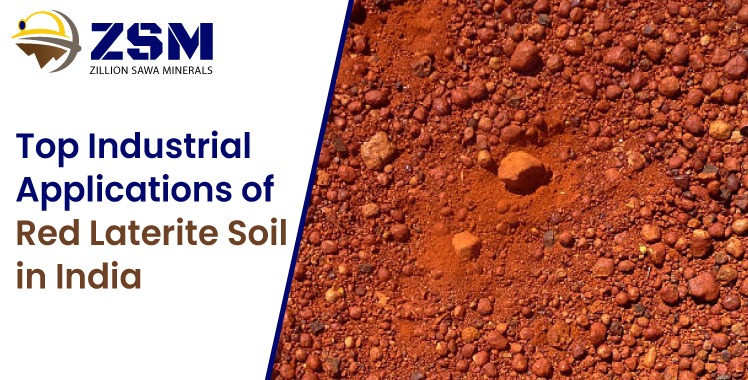
The Red laterite soil stands out among the variety of natural resources in India due to its versatile usage even within the same area. It's one of the most used resources in construction, metallurgy, and even agriculture due to its richness, structure, and particular mineral attributes. This article will analyze the formation, composition, usage, and industry importance of red laterite soil.
What Is Red Laterite Soil?
The red laterite soil consists of reddish-brown and iron-rich aspects. This soil type is one of the most common across India due to its strength and durability along with richness in other minerals.
Formation Process
The red laterite soil is formed when rocks undergo intense leeching due to high rainfall and temperature. This particular soil will result from prolonged rains; when silica is washed away from the soil it will concentrate iron, aluminum, and some trace minerals.
Key Features
• Rich in iron and aluminum
• Low in silica
• Well drained
• Compacts readily
Chemical Composition
1. Iron Oxide (Fe2O3):
Cement and some metallurgy uses along with pigments.
2. Aluminum Oxide (Al2O3):
Has uses within the metal extraction, refractories, and some industry chemistry.
3. Trace Minerals:
Includes titanium, manganese, and other minerals that increase industrial value.
Why These Matter for Industries:
That unique feature allows Red laterite soil to make a viable substitute for low-grade ores. It's also usable as a construction stabilizer. It's usable raw material for ceramics, as and soil-conditioning pigments.
Why Red Laterite Soil Is Important for Indian Industries
Abundant Availability
The massive deposits spanning Maharashtra, Karnataka, Odisha, and Kerala allows for easy procurement.
Cost-Effective
The low costs of extraction and transportation reduces overall cost of production for other industries.
Ideal for Manufacturing & Construction
It’s mineralogical attributes improve the strength, longevity, and thermal efficiency.
Sustainable Mining Factors
Laterite deposits regenerate over the years and may be mined with minimum ecological impact, making them appropriate for industries looking for sustainable uncooked materials.
For deeper insights on how laterite helps current industries, you may discover our associated article:
five Industries Where Laterite Still Makes a Big Impact
Major Industrial Applications of Red Laterite Soil in India
1.Cement & Construction Industry
- Consuming portion of cement production.
- Enhances strength and durability of bricks.
- Utilized in concrete blocks and paving blocks, and in road sub-base layers.
2.Metallurgical and Iron Processing
- Substitute for low-grade iron ores.
- Facilitates extraction of iron and aluminum.
- Participates in iron and metallic processing and pellet formation.
3.Agriculture and Soil Conditioning
- Increased moisture profile in arid areas.
- Suitable for plantation plants like tea, coffee, rubber, and cashew.
- Assists in soil pH neutralization.
4.Chemical and Pigment Industry
Natural dyes for red laterite soil includes
- Paints
- Ceramics
- Flooring and tiles
- Natural dye and colorant
5.Brick and Tile Manufacturing
- With high iron content, bricks are colored red.
- Ideal for producing laterite tiles and bricks.
- Provides unique weather resistance and natural strength.
6.Road Infrastructure
- Used as fill, sub-grade and sub-base material for roads.
- Most appropriate for rural and semi urban roads.
- Provides high degree of compaction and stability.
7.Environmental Applications
- Water filtration assistance.
- Due to excellent adsorption characteristics, it is utilized for waste management.
- Helps in land reclamation and soil-formation activities.
Red Laterite Soil in India — Major Locations
Significant deposits of crimson laterite soil are observed in:
- Maharashtra: Sindhudurg, Ratnagiri
- Karnataka: Uttara Kannada, Dakshina Kannada
- Odisha: Koraput, Kalahandi, dan Sundargarh
- Kerala: Wayanad, Idukki, dan Kannur
- Gujarat: Junagadh dan Bhavnagar
- Andhra Pradesh: Visakhapatnam dan Nellore
Other states together with Tamil Nadu, Jharkhand, and West Bengal additionally host huge lateritic zones.
Soil Quality Evaluation in Various Industries
Testing Parameters
Industries usually evaluate:
- Content of Moisture
- Percentage of Iron (Fe)
- Percentage of Alumina (Al₂O₃)
- Grain Size & Texture
- Level of Impurities (Silica, Organic Matter)
What Buyers Should Evaluate Before Buying
- Uniformity of Material
- Long Term Supply of Bulk Material
- Dependable Transport and Logistics
- Quality Certificates and Test Results
Zillion Sawa Minerals Pvt Ltd. ensures uninterrupted quality supply and fully provides all necessary attestations.
Red Laterite Soil FAQs
1. What is the significance of red laterite soil in construction?
Due to its compaction feature and iron content, it is of great use in construction of blocks, bricks and as road base.
2. What are the uses of laterite soil?
In manufacture of cement, metallurgy, construction of roads, bricks and use in pigments, agriculture, filtration and in various other uses.
3. Which are the principle customers of crimson laterite soil?
In Construction, Cement, Ceramics, Iron, Chemical and Agricultural Industries.
4. Where in India is laterite soil found?
In states inclusive of Maharashtra, Karnataka, Odisha, Kerala, Gujarat and Andhra Pradesh.
5. Is laterite soil useful for agriculture?
Yes. It aids in the cultivation of some crops and improves the soil structure of the area.
Conclusion
Red laterite soil is a valuable industrial resource that powers multiple sectors in India—from construction to chemicals. Its natural abundance, mineral strength, and cost-effectiveness make it indispensable for manufacturers and builders.
If your industry needs high-quality red laterite soil, Zillion Sawa Minerals Pvt. Ltd. ensures reliable supply, bulk quantities, and consistent quality.
Contact us today for quotations and samples!